
Your website is often the first place a customer meets your business. If it loads slowly or goes offline during a busy day, that customer may never come back. The hosting plan behind your site plays a bigger role in this than most small business owners expect.
When choosing a plan, two options come up again and again: Shared Hosting and VPS Hosting. Both can run a business website well, but they work very differently. Picking the wrong one can mean paying for power you do not need, or struggling with a site that cannot keep up with your traffic.
The Difference Between Shared Hosting and VPS Hosting comes down to how server resources are divided, how much control you get, and how much you pay. Understanding these points helps a small business choose a plan that fits today and still makes sense as the business grows.
SpixHost helps businesses make this choice with confidence. For businesses in Pakistan, SpixHost provides Web Hosting at affordable and discounted prices, along with Google Workspace, Zoho Workplace, Microsoft 365, Chrome OS, domains, software development, MVP development, and data migration services, so small businesses can start with the right plan and upgrade smoothly later.
What Is Shared Hosting?
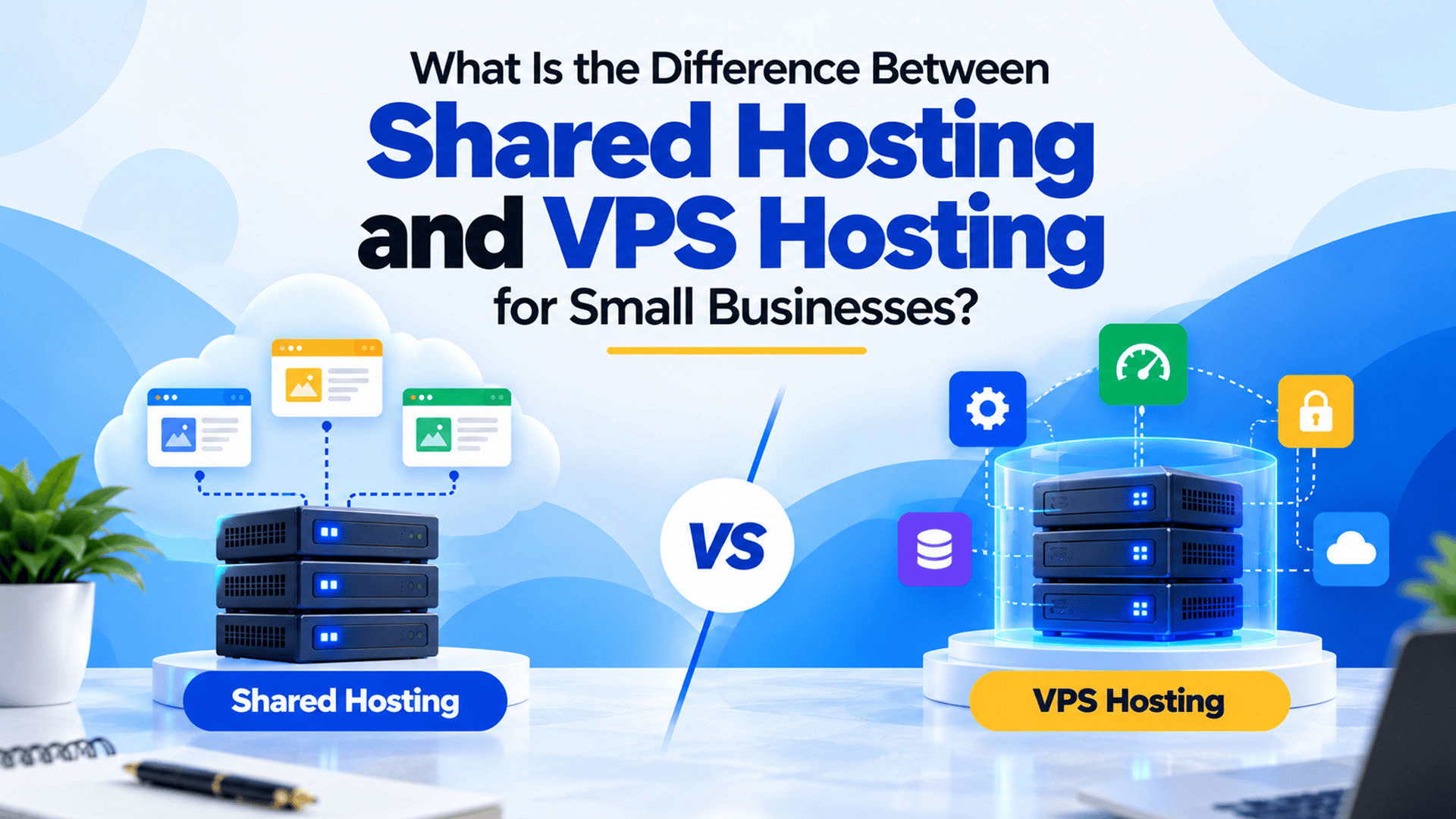
Shared Hosting means your website sits on a server together with many other websites. All of them use the same pool of server resources, such as memory, storage, and processing power. The hosting provider manages the server, updates, and security, so you do not need technical skills to run your site.
Shared hosting usually includes:
- A simple control panel for managing files, emails, and databases
- One-click installers for popular tools like WordPress
- Basic security features such as SSL certificates
- Server maintenance handled by the provider
Because the cost of the server is split across many users, shared hosting is the most budget friendly option. It is a popular starting point for new business websites, blogs, and portfolio sites.
What Is VPS Hosting?
VPS Hosting (Virtual Private Server hosting) also uses a single physical server, but it is divided into separate virtual servers. Each virtual server gets its own reserved share of memory, processing power, and storage. Other websites on the same machine cannot take those resources away from you.
This gives a Virtual Private Server setup that feels much closer to having your own server, without the high cost of renting a whole machine.
VPS hosting usually offers:
- Dedicated resources for your website only
- Root access for installing custom software
- Better performance during traffic spikes
- More control over security settings and configuration
Key Differences at a Glance
| Feature | Shared Hosting | VPS Hosting |
| Resources | Shared with other websites | Reserved for your site |
| Performance | Can slow down when neighbors are busy | More stable and consistent |
| Cost | Lowest price | Higher than shared |
| Technical skill needed | Very little | Some knowledge helps |
| Control | Limited | High, including root access |
| Best for | New and small websites | Growing sites and online stores |
How Performance Differs
On a shared server, every website draws from the same resources. If one site gets a sudden rush of visitors, others on that server may load more slowly. For a small business with modest traffic, this is often not a problem.
With VPS hosting, your resources are set aside for you. Your pages load at a steady speed even when other users on the physical server are busy. This matters for businesses that rely on Website Performance to keep customers happy, such as online stores or booking websites.
How Security Differs
Hosting Security is another important point. On shared hosting, the provider handles most protection, which suits beginners. The trade-off is that you have less control over server level settings.
VPS hosting isolates your website in its own virtual space, which reduces the chance that problems on another site affect yours. You can also set up custom firewalls and security rules. Keep in mind that with more control comes more responsibility, so someone on your team (or your hosting provider) needs to manage those settings.
How Cost Compares
Shared hosting is the cheaper choice, which is why many small businesses start there. VPS plans cost more because you are paying for dedicated resources and extra control.
A Cheap Web Hosting plan is not always the best value, though. If a low cost plan leads to slow pages or downtime, the lost sales can cost more than the savings. The right question is not "which is cheaper?" but "which plan supports my traffic and goals?"
Which One Should a Small Business Choose?
Choose Shared Hosting If:
- You are launching a new business website
- Your traffic is low to moderate
- You run a simple site, blog, or company profile
- You want the lowest cost and easy management
Choose VPS Hosting If:
- Your website already receives steady or growing traffic
- You run an online store or web application
- You need custom software or special server settings
- Your site slows down or struggles during busy periods
These are general guidelines. Two businesses of the same size can have very different needs depending on what their website actually does.
Signs It Is Time to Upgrade from Shared to VPS
Many small businesses start on shared hosting and move up later. Watch for these signs:
- Pages load slowly, especially during peak hours
- You receive warnings about resource limits
- Your traffic is growing month after month
- You need software that shared hosting does not support
- Checkout or login pages feel sluggish for customers
Upgrading before problems hurt your sales is better than waiting until customers start leaving. This is where Scalable Web Hosting helps, since a provider that offers both plan types makes the move simple.
Practical Tips Before You Decide
- Check your current traffic: Use analytics to see how many visitors you get and when they arrive
- Think about growth: Plan for the next year, not just today
- Review the technical side: Be honest about whether you have the skills to manage a server
- Ask about migration: Make sure the provider can move your website when you upgrade
- Compare plan limits: Read what each plan includes, since resources and features differ between providers
Why Choose SpixHost for Shared and VPS Hosting?
Choosing between shared and VPS hosting is easier when your provider offers both and can guide you honestly. SpixHost provides shared hosting for businesses getting started, and VPS hosting for those who need more power and control. That means a small business can begin with an affordable plan and upgrade within the same provider as it grows.
For businesses in Pakistan, SpixHost provides Web Hosting at affordable and discounted prices, along with Google Workspace, Zoho Workplace, Microsoft 365, Chrome OS, domains, software development, MVP development, and data migration services. This lets small businesses manage their website, business email, domain, and other digital needs through one provider, instead of juggling several.
In the end, shared hosting is the simple, low cost way to get online, while VPS hosting offers dedicated resources and control for growing needs. The best choice depends on your traffic, your website type, and your plans for growth. Start with what fits today, watch for the signs of growth, and upgrade when your business is ready.
Frequently Asked Questions
1. Is VPS hosting faster than shared hosting?
Usually, yes. VPS hosting gives your site reserved resources, so performance stays steadier, especially during busy periods.
2. Can a small business start with shared hosting?
Yes. Shared hosting is a common starting point for new business websites with low to moderate traffic, and you can upgrade later as you grow.
3. Do I need technical skills to use VPS hosting?
Some knowledge helps, since VPS gives you more control and more responsibility. Many providers also offer support or managed options to help.
4. Will I lose my website data if I move from shared to VPS?
Not if the migration is done properly. A good provider can move your files, databases, and emails safely to the new plan.
5. Does SpixHost offer both shared and VPS hosting in Pakistan?
Yes. SpixHost provides shared hosting and VPS hosting in Pakistan at discounted prices, along with related digital solutions for businesses.